Does OSHA Require a Written Respirator Program?
If your crews wear respirators even just dust masks a written program isn’t optional. OSHA requires a written respirator program any time respirators are used in the workplace. Here’s what that means for small contractors, and how to avoid fines, citations, and shut-downs.
Yes. OSHA requires a written respirator program under 29 CFR 1910.134 whenever respirators (including N95s) are necessary for worker protection or voluntarily used by employees. The program must include medical evaluations, fit testing, training, and site-specific procedures.
What Triggers the OSHA Respirator Program Requirement?
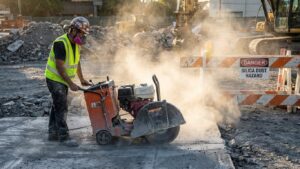 OSHA’s mandate applies under two conditions:
- Respirators are required by the employer or due to hazardous air contaminants exceeding permissible exposure limits (PELs).
- Respirators are voluntarily used, especially tight-fitting models like elastomeric respirators or N95s—these still require certain written components.
Don’t assume “voluntary use” means no paperwork. Disposable dust masks seem low risk, but if used regularly, OSHA may see them as regulated PPE, which triggers written program and medical evaluation requirements.
Example: A concrete contractor in Texas was cited $3,500 for failing to provide a written program when laborers used N95s for silica dust, even though the workers requested the masks themselves.
What’s Required in an OSHA-Compliant Written Respirator Program?
OSHA requires a comprehensive, written document tailored to your job activities and respirator use. At minimum, it must detail the following:
- Procedures for selecting respirators based on hazards, duration, and activity.
- Medical evaluations confirming worker fitness to wear respiratory protection.
- Fit testing for tight-fitting respirators (initial and annually).
- Routine use, maintenance, and cleaning practices.
- Emergency use procedures if applicable to your work type.
- Training program on hazards, respirator use, and limitations.
- Program evaluation and updates as work conditions change.
This isn’t a one time checklist it has to be site-specific, written, accessible to employees, and regularly updated.
Voluntary vs. Required Respirator Use
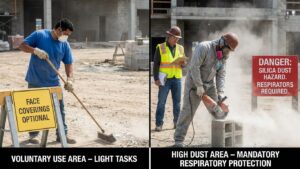
| Condition | Program Required? | Medical Evaluation? | Fit Test? |
|---|---|---|---|
| Employer-required use (due to hazardous exposures) | Yes—Full written program | Yes | Yes |
| Voluntary use of N95/dust mask—not required by employer | Yes—Limited program | Yes | No |
| Voluntary use of elastomeric respirator | Yes—Limited program | Yes | Yes |
FAQs About Written Respirator Program
What must be included in a written respirator program?
The written program must include procedures for selection, medical evaluations, fit testing, cleaning, training, and program evaluation as per 29 CFR 1910.134.
Do I need a written program if my workers wear N95s voluntarily?
Yes. Even voluntary use of N95s requires a brief written program and medical evaluation, per OSHA’s interpretation.
Is mask use during wildfire smoke considered voluntary?
Usually no. If air quality hits AQI 151+, California and federal rules treat N95 use as required PPE. That mandates a full written program.
Do I need a fit test for paper dust masks?
Not if truly voluntary and used for comfort only. But if masks are used due to known hazards, then yes fit testing is required.
How often do I need to update the respirator program?
You must reevaluate the written program whenever work conditions, hazards, or respirator use patterns change.
If your team uses respirators for any reason, OSHA expects a written respirator program. No shortcuts. No exceptions. Skipping this requirement opens you to fines, stop work orders, and serious legal exposure. Don’t guess write it down, audit it, stay compliant.
Need help building a compliant written program? Call us at (215) 678-0470 to get a turnkey solution tailored for contractors.
- OSHA 29 CFR 1910.134 Full Text – Official regulation covering respirator program requirements.
- CDC/NIOSH Respirator Approval Program – Guidelines for selecting approved respiratory equipment.