The Focus Four Hazards are OSHA’s leading targets for enforcement across all construction sites. Knowing what they are and how to control them can mean the difference between passing an inspection or facing major fines, shutdowns, or even jobsite fatalities.
What Are OSHA’s Focus Four Hazards?
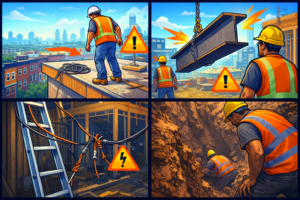
OSHA’s Focus Four Hazards are the top four causes of workplace fatalities in construction: falls, struck-by objects, electrocutions, and caught-in between incidents. These are priority targets during OSHA inspections and safety audits due to their high risk of serious injury or death.
Why Are the Focus Four Hazards Important to Know?
Because they account for over 60% of construction worker deaths, OSHA uses the Focus Four Hazards to guide both enforcement and training programs. If your crew is exposed to any of these without adequate protection or training, you are risking heavy citations and possible jobsite shutdowns.
According to OSHA data, the breakdown of construction fatalities is as follows:
- Falls: ~36%
- Struck-by: ~15%
- Electrocutions: ~8%
- Caught-in/between: ~5%
These aren’t rare accidents they’re predictable, frequently cited, and heavily penalized when ignored. OSHA inspectors routinely look for violations tied to these four categories, especially on smaller or subcontracted sites where oversight is often limited.
How Can You Protect Against Each Focus Four Hazard?
Compliance isn’t optional if you’re trying to stay open and profitable. Here’s how to proactively address each hazard:
1. Falls
- Use fall protection at heights of 6 feet or more (platforms, harnesses, guardrails).
- Train all employees on fall risks and equipment usage under 29 CFR 1926.503.
- Inspect all ladders and scaffolding before use.
2. Struck-by Hazards
- Enforce hard hat use in all active zones.
- Secure materials during overhead lifting.
- Maintain safe distances from vehicles and equipment under movement regulations (1926.601).
3. Electrocutions
- Maintain a 10-foot clearance from all overhead power lines.
- Use GFCIs and inspect equipment cords regularly under Subpart K.
- Only qualified personnel should perform electrical work.
4. Caught-in/Between
- Protect trenches over 5 feet deep with shoring systems or trench boxes.
- Keep machinery properly guarded and workers outside moving parts.
- Comply with lockout/tagout rules on all maintenance operations.
Focus Four Hazard Types Comparison Table
| Hazard | Main Cause | OSHA Regulation | Key Control |
|---|---|---|---|
| Falls | Roof work, ladders, scaffolds | 29 CFR 1926 Subpart M | Fall arrest systems, safety rails |
| Struck-by | Moving vehicles, flying/falling objects | 29 CFR 1926.600 / .601 | Hard hats, site visibility, exclusion zones |
| Electrocutions | Live wires, improper lockout | 29 CFR 1926 Subpart K | GFCIs, distance, qualified workers only |
| Caught-in/between | Trenches, unguarded machinery | 29 CFR 1926 Subpart P | Trench boxes, LO/TO, shielding |

FAQ: OSHA Focus Four Hazards
What are the 4 Focus Four Hazards according to OSHA?
Falls, struck-by objects, electrocutions, and caught-in/between hazards. These are the deadliest risks in construction work.
Why does OSHA focus on these four hazards?
Because they cause the majority of construction fatalities and serious injuries. OSHA inspections prioritize these areas due to risk and frequency.
Do small contractors get cited for Focus Four violations most often?
Yes. Small and mid-sized contractors are often cited for fall protection and struck-by violations during inspections due to lack of systems or training.
What is the penalty for violating a Focus Four hazard regulation?
Penalties can range from $16,131 per violation to over $161,323 for willful or repeat offenses. Serious injuries or deaths also lead to legal exposure.
Are training programs required for these hazards?
Yes. OSHA mandates that employers provide documented training for all workers exposed to fall risks, electrical hazards, and heavy equipment.
Ignoring OSHA’s Focus Four Hazards puts lives and your business at risk. Take control by enforcing controls, documenting training, and staying inspection ready. Don’t wait until an accident or fine forces your hand.
Stay compliant. Protect your team. Prevent the shut-down. Start with fall protection training now.

- Fall Protection Training Course – Needed to comply with OSHA Subpart M.
- Construction Electrical Safety Guide – Covers GFCIs, lockout/tagout, and qualified person rules.
- Trench Safety Competent Person Training – Required for trench work over 5 feet deep.
- OSHA Focus Four Hazards Booklet – Official guidance and training resource.
- U.S. Bureau of Labor Statistics – Injury & Fatality Data