OSHA training and OSHA compliance are not the same thing and confusing them is one of the most common mistakes Philadelphia contractors make.
Training educates workers. Compliance protects your business. You need both.
Many contractors use the terms OSHA training and OSHA compliance interchangeably.
They are related, but they are not the same thing.
This misunderstanding creates problems on jobsites throughout Philadelphia, South Jersey, and the surrounding Tri-State area. A company may believe it is compliant because employees have OSHA cards, only to discover during an inspection that important safety requirements, documentation, or procedures are missing.
What Is OSHA Training?
OSHA training refers to educational programs designed to help workers recognize hazards, understand safety requirements, and perform their jobs safely.
Common examples include:
- OSHA 10-Hour Construction Training
- OSHA 30-Hour Construction Training
- Fall Protection Training
- Forklift Training
- Hazard Communication Training
- Confined Space Training
For many construction projects in Philadelphia, OSHA training is required before workers are allowed on-site. But training alone does not guarantee compliance.
What OSHA Training Does
OSHA training helps workers recognize common workplace hazards, understand safe work practices, learn their rights and responsibilities, and meet project and employer requirements.
Training is often the first step toward creating a safer workplace but it is only the first step.
What Is OSHA Compliance?
OSHA compliance refers to meeting OSHA standards, regulations, and safety requirements on an ongoing basis. Compliance involves much more than attending a class.
It includes:
- Maintaining required documentation
- Conducting safety inspections
- Correcting hazards promptly
- Providing appropriate PPE
- Following OSHA regulations
- Maintaining training records
- Enforcing safety procedures
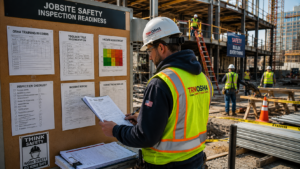
Compliance is what OSHA inspectors evaluate when they visit a jobsite. A worker may have completed OSHA 10 training, but if guardrails are missing, ladders are damaged, or training records cannot be produced, the company may still receive citations.
The Most Common Misconception
“We have OSHA cards, so we’re compliant.”
Unfortunately, that’s not how OSHA works.
Think of OSHA training like a driver’s education course. Completing the course teaches you how to drive. Following traffic laws every day is what keeps you compliant. Construction safety works the same way.
Training provides knowledge. Compliance requires consistent action.
Why Contractors Need Both
Successful contractors understand that training and compliance work together. Training helps workers understand what safe work looks like. Compliance ensures those safe practices are actually being followed.
When companies invest in both, they often experience:
- Fewer incidents and injuries
- Better inspection outcomes
- Improved worker confidence
- Reduced liability exposure
- Stronger safety culture
- Greater client confidence
Safety becomes a business advantage rather than a regulatory burden.
What OSHA Inspectors Actually Look For
During an inspection, OSHA may review employee training records, hazard assessments, incident reports, equipment inspections, PPE usage, fall protection systems, safety procedures, and corrective action documentation.
Inspectors evaluate whether safety practices are being implemented not simply whether employees attended training. This is why documentation and accountability are critical components of compliance.
A Simple Compliance Checklist for Contractors
✓ Are toolbox talks documented?
✓ Are hazards being identified and corrected?
✓ Is required PPE available and being used?
✓ Are equipment inspections documented?
✓ Are supervisors enforcing safety requirements consistently? If you answered “no” to any of these, there may be compliance gaps that need attention.
Frequently Asked Questions
Is OSHA 10 the same as OSHA compliance?
No. OSHA 10 is a training program designed to educate workers about workplace hazards. OSHA compliance involves meeting OSHA standards and maintaining safe working conditions on an ongoing basis.
Does OSHA 30 make a company compliant?
No. OSHA 30 provides additional safety education for supervisors and managers, but compliance requires ongoing implementation of safety programs and procedures.
Can a company be cited even if workers have OSHA cards?+
Yes. OSHA citations are based on workplace conditions, safety practices, documentation, and compliance with applicable standards — not whether employees hold training cards.
What is the first step toward improving OSHA compliance?+
Start by evaluating your current safety program, training records, documentation practices, and jobsite conditions to identify gaps before OSHA identifies them for you.
Final Thoughts
OSHA training and OSHA compliance are both essential, but they serve different purposes. Training builds knowledge. Compliance demonstrates action.
The contractors who consistently perform well during inspections understand that a certificate alone is not a safety program. Real compliance happens when training, documentation, accountability, and jobsite practices work together.
Whether you’re managing a project in Philadelphia, South Jersey, or anywhere in the Tri-State area, the goal is not simply to earn OSHA cards it’s to create safer jobsites and stronger businesses.
Need Help With OSHA Training or Compliance?
TRN OSHA provides OSHA 10, OSHA 30, workplace safety training, and compliance focused support to help contractors stay jobsite ready, inspection ready, and workforce ready.